To book: contact@roofinspectionedinburgh.com or Tel: 0131 510 3231
Tenement chimneys are highly exposured to weather with a lack of visibility often until it’s too late.
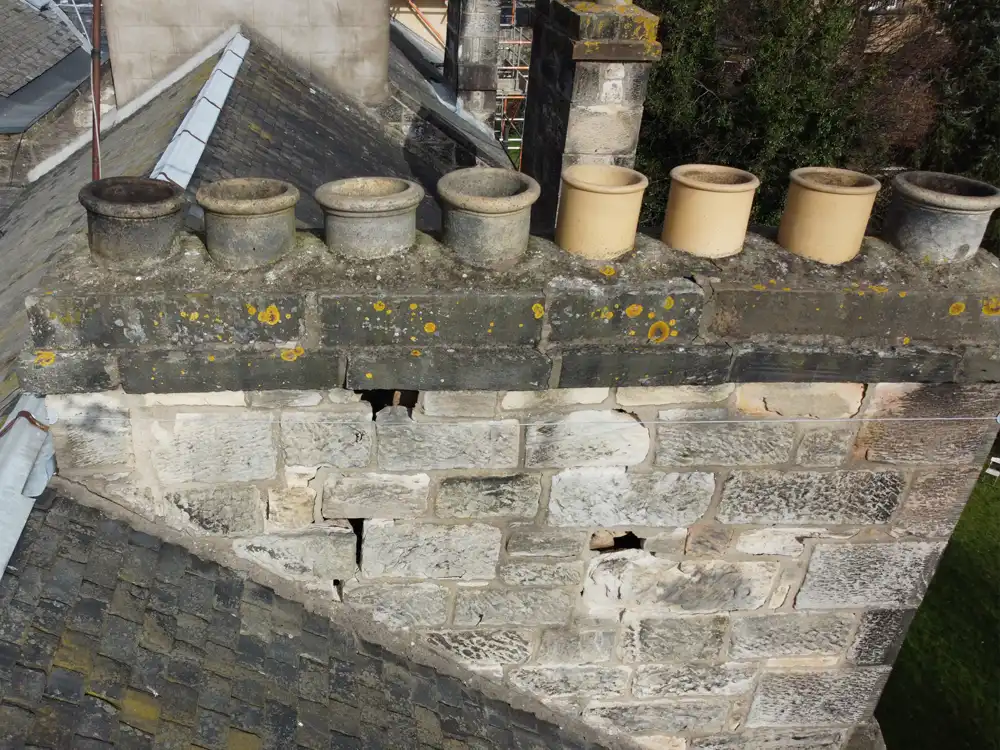
Edinburgh’s frequent freeze-thaw cycles can weaken mortar and stonework, making high resolution drone footage invaluable for spotting issues early. Drone technology allows a level of precision and safety that traditional methods often cannot achieve, checking for cracks, loose masonry, weather erosion, and signs of movement. Drone surveys help identify structural defects early, prevent water ingress, and protect both the building fabric and residents without the need for scaffolding or risky roof access. Many tenement chimneys are constructed from sandstone, which can deteriorate over time. Drone inspections allow surveyors to zoom in on stonework and brickwork to assess spalling, eroded mortar joints, failed pointing, and evidence of water penetration. The ability to visually inspect every surface especially those at height or behind obstructions means defects are identified quickly and accurately. Recommendations such as lime repointing or stone repair can then be based on clear photographic evidence.
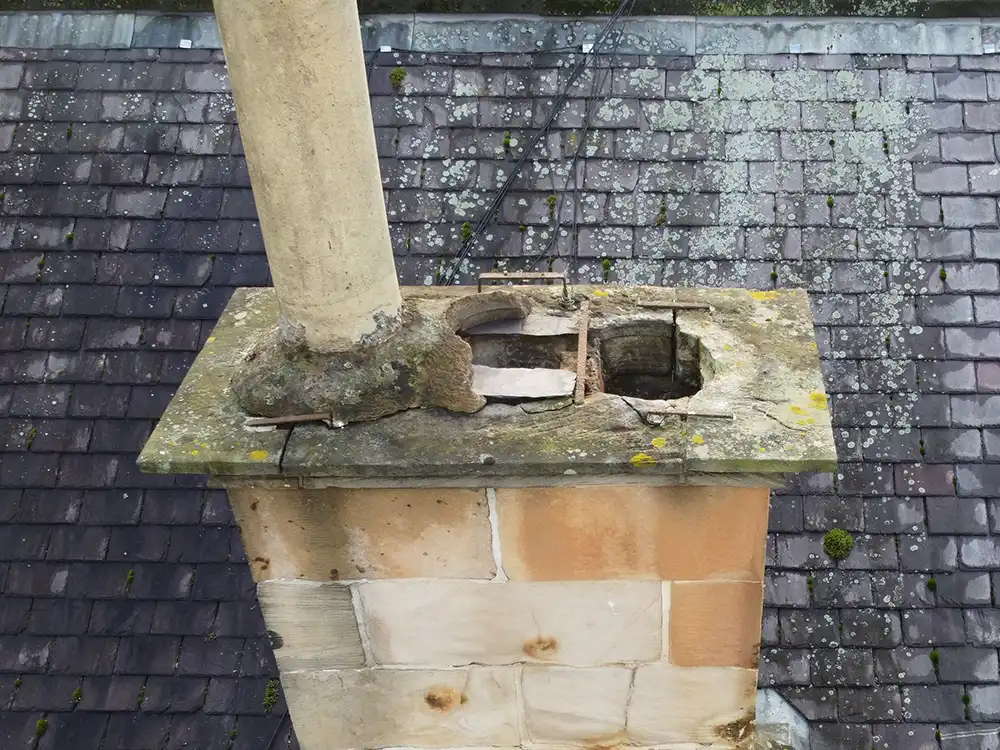
Chimney pots are essential for ventilation and flue performance, but they can easily become cracked, loose, or poorly fixed. Using a drone, inspectors can examine the top of the chimney stack closely and safely, assessing the condition of each pot, the fit of terminals, and the stability of metal cowls. Drone imagery reveals any missing pots, failed mortar beds, or damaged cowls that could allow moisture into the flues. This method eliminates the need for working at height while providing a superior visual assessment. Lead flashings and weatherings around the base of the chimney are common sources of water ingress in Edinburgh tenements. Drone surveys capture detailed aerial images that show lifting edges, splits, corrosion, or signs of poor installation. Because Edinburgh roofs face frequent wind and rain, ensuring the integrity of leadwork is critical. Drone inspection helps pinpoint the exact areas requiring repair, ultimately reducing damp issues inside top-floor flats.
Leaning, cracking, loose masonry, general weathering
Cracks, splits, chips, supporting mortars
Concrete or stone, pointing, cramps
Cracked or washed out pointing, split and spawling render
Mortar or lead flashings/soakers, splits, corrosion, lifting
Extensions abov and below, further flashing and rendering joints
A drone chimney inspection also includes the wider roof area where the chimney meets the roof covering. Inspectors assess nearby slates or tiles for damage, displacement, or missing pieces. Drone footage also helps evaluate the condition of ridge tiles, copes, and skews. This comprehensive view ensures that all elements contributing to water tightness around the chimney are properly examined. Drone chimney inspections provide a safe, efficient, and highly accurate method for assessing Edinburgh tenement chimneys. With detailed aerial imagery and no need for costly access equipment, defects can be identified early and repair decisions are based on clear, reliable evidence. Regular drone surveys help protect historic buildings, reduce long-term maintenance costs, and ensure the safety of residents.
We undertake tenement roof inspection for condition monitoring, prepurchase, insurance claims and repair estimates. We can provide drone thermographic inspection for flat roof leak detection. Due to the science of thermography two surveys are conducted one at day and one after dark. Imagery captured is processed for evaluation and reporting.
5 South Charlotte Street, Edinburgh EH2 4AN
Phone: (0131 510 3231)